Research
We Audited 20 Top B2B Brands for AI Visibility. Even the Best Are Leaving Visibility on the Table.

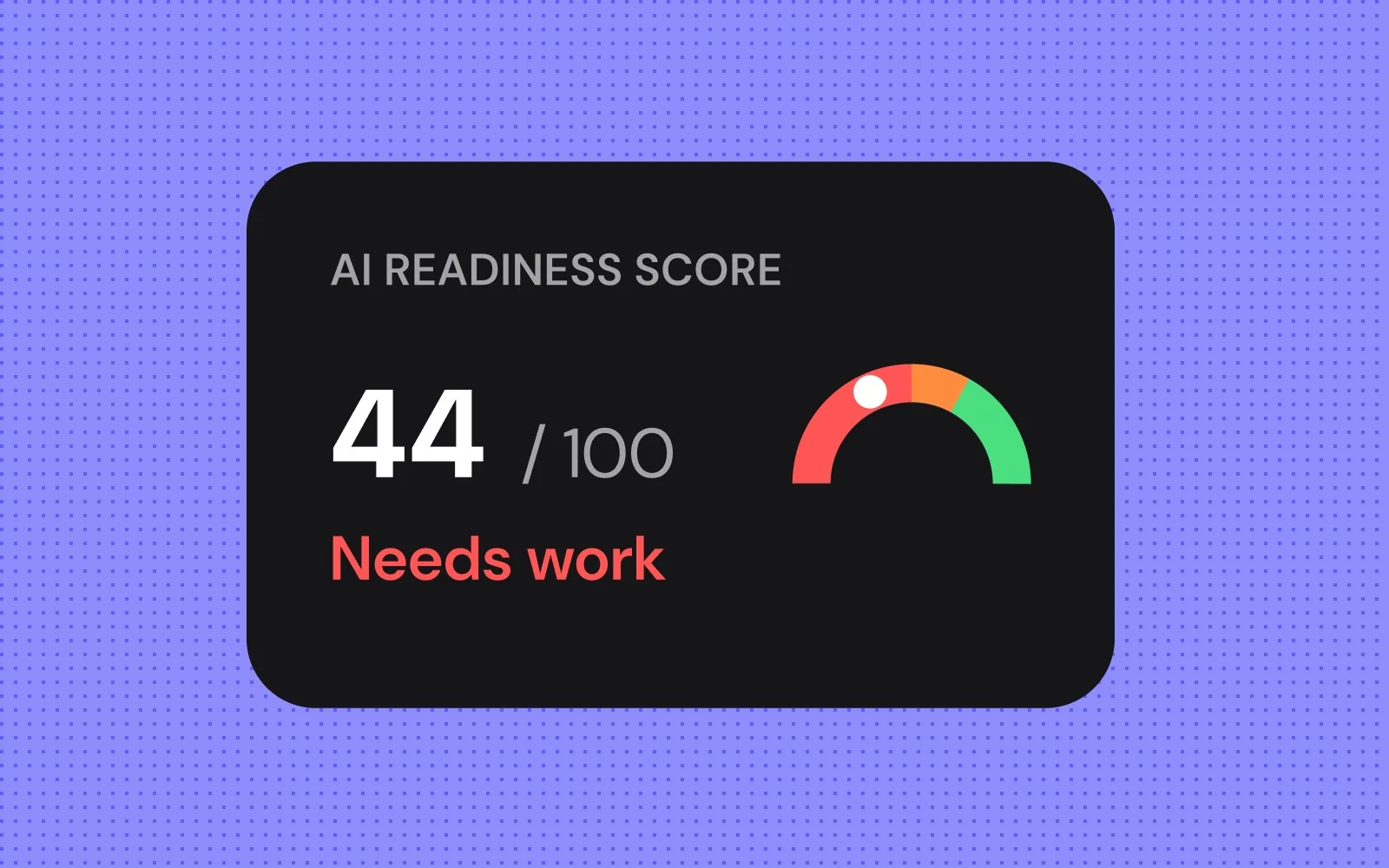
The rise of AI search has fundamentally changed how businesses get discovered. When someone asks ChatGPT, Perplexity, or Claude for software recommendations, vendor comparisons, or industry insights, which brands actually get cited in the answer?
We wanted to find out. Using the Yolando Chrome Extension, we analyzed the AI-readiness of 20 leading B2B brands, like Microsoft, NVIDIA, EY, and Deloitte, to understand what separates the companies that dominate AI-generated answers from those that remain invisible.
The findings reveal a surprising truth: even the most sophisticated B2B marketers are leaving significant visibility on the table.
About the Yolando Chrome Extension
Before diving into the findings, here's what we used for this analysis.
The Yolando Chrome Extension is a real-time evaluator that reveals how "answer-ready" any webpage is for AI models. With one click on any URL, you get a complete GEO (Generative Engine Optimization) score that measures how effectively AI models can parse, trust, and cite your content.
The tool analyzes:
Structural clarity: How well your headings, hierarchy, and formatting help models extract information
Factual density: Whether your content contains concrete, quotable facts or vague abstractions
Authority signals: The presence of citations, sources, proof points, and credible references
Content coherence: How clearly your narrative flows for machine interpretation
You can download the extension here and start auditing your own content—or your competitors'—for free!
Our Methodology
We analyzed homepage and key landing pages from leading B2B brands across software, infrastructure, and enterprise services using the Yolando Chrome Extension. These weren't obscure blog posts or buried resources—these were the front doors of some of the most well-funded, sophisticated marketing teams in B2B. Each page received a comprehensive GEO score that revealed how effectively AI models could parse, trust, and cite the content. From there, we identified clear patterns in what these top performers are doing right, where they're falling short, and what the aggregate data tells us about the current state of AI readiness in B2B marketing.
The Headline Finding: An Average Score of 78
The average GEO score across these top B2B brands was 78 out of 100.
At first glance, a 78 seems respectable—and it is. But in the context of AI search, where the difference between being cited and being ignored can hinge on structural details, content clarity, and factual precision, there's a meaningful gap between good and great. Top-tier brands optimized for AI visibility are scoring 90% and above, which means even sophisticated marketers have clear room to improve.
What a 78 really means:
Even the most sophisticated B2B brands are not fully optimized for how AI models read and synthesize content
There's a 22-point gap between where these companies are and where they could be
Most brands are leaving citations, visibility, and influence on the table—not because their content is bad, but because it's not built for LLM interpretation
The brands scoring in the high 80s and 90s have a structural advantage that compounds over time as AI search becomes the default discovery mechanism
In other words: if the best-resourced B2B companies in the world are averaging a 78, there's enormous white space for any brand willing to optimize intentionally for AI readiness.
Key Strengths: What Top B2B Brands Are Doing Well
Despite the opportunities for improvement, the highest-scoring brands in our analysis demonstrated several clear patterns worth emulating.
1. Strong Visual Hierarchy and Scannable Structure
The best performers used clear H2 and H3 headings that acted as natural extraction points for AI models. These weren't just aesthetic choices—they were structural signals that helped models understand the relationship between ideas and quickly locate relevant information.
Example pattern: Instead of long blocks of prose, top scorers broke content into distinct sections with descriptive headings like "How It Works," "Key Benefits," and "Use Cases"—making it easy for models to extract answers to specific queries.
2. Concrete, Quotable Facts Over Marketing Fluff
The highest-scoring pages included specific data points, statistics, feature lists, and tangible outcomes. When AI models look for authoritative information to cite, they favor content with clear, extractable facts over vague value propositions.
What works: "Reduces deployment time by 40%" or "Supports 50+ integrations" instead of "Streamlines your workflow" or "Makes everything easier."
3. Strategic Use of Social Proof and Authority Signals
Brands that scored well incorporated customer logos, case study references, third-party validation, and specific examples throughout their pages. These weren't buried in separate testimonial sections—they were woven into the narrative as proof points that AI models could reference when building credible answers.
Missed Opportunities: Where Even the Best Are Falling Short
Despite their strengths, our analysis revealed consistent gaps that are holding even top B2B brands back from maximum AI visibility.
1. Weak or Missing Citations
One of the most common weaknesses was the absence of clear citations, external links, or references to authoritative sources. AI models prioritize content that demonstrates where its information comes from. When claims are made without backing, even true statements lose credibility in the eyes of LLMs.
The gap: Many B2B homepages make bold claims about market position, product capabilities, or customer outcomes without linking to case studies, third-party reports, or supporting data.
2. Overuse of Abstract Language
Marketing copy is often optimized for emotional resonance, not factual extraction. Phrases like "transform your business," "unlock potential," or "drive innovation" may sound compelling to human readers, but they give AI models nothing concrete to work with.
The problem: When asked "What does [Company X] do?", models can't extract a clear answer from abstract positioning statements. They need explicit product descriptions, feature lists, and use case examples.
3. Lack of Structured Data and Explicit Taxonomies
Few brands took advantage of structured content formats—FAQ sections, comparison tables, step-by-step workflows, or bulleted feature lists—that make information easier for models to parse and retrieve.
The cost: Without these extraction-friendly formats, even great content becomes harder for AI to cite accurately, reducing the likelihood of being pulled into generated answers.
4. Redundant or Contradictory Messaging
Some pages repeated similar value propositions across multiple sections without adding new information, or presented conflicting framing that confused the model's understanding of what the product actually does.
The effect: Instead of reinforcing a clear narrative, redundancy and contradiction dilute the page's authority and make it less likely to be selected as a trusted source.
Why This Matters: The Opportunity is Wide Open
Here's the real insight from this analysis: if the most sophisticated, best-resourced B2B brands in the world are averaging a 78, the playing field is more level than you think.
This isn't a gap that gets solved with budget or brand recognition. It's a structural challenge—and that means smaller, nimbler companies have a genuine opportunity to outmaneuver larger competitors. The brands that move first on AI readiness won't just close the gap, they'll leapfrog companies ten times their size. Because in AI search, what matters isn't how much you spend on ads or how big your domain authority is. What matters is whether your content is structured, factual, and citation-ready.
The average score of 78 reveals that even market leaders are leaving 22 points of visibility on the table. For smaller brands, that's not a disadvantage—it's an opening. While enterprise companies are slow to adapt and bogged down in legacy content strategies, you can move faster, optimize intentionally, and become the brand AI models cite when answering the questions your buyers are asking.
How Yolando Helps You Close the Gap
The findings from this analysis reveal a clear pattern: even the most sophisticated B2B brands are missing structural elements, factual density, and authority signals that AI models need. But here's the advantage—these aren't problems that require massive budgets or years of SEO legacy to fix. They require the right tools and a strategic approach.
That's exactly what Yolando provides.
Chrome Extension: Get instant visibility into how AI-ready any webpage is. Audit your own content to see which pages are holding you back, or analyze competitor pages to understand why they're getting cited and you're not. Every scan gives you a real-time GEO score and a specific action plan—no guessing, just clear priorities.
AI Visibility: Track how AI models actually see and represent your brand across hundreds of relevant prompts. You'll see where you rank in AI-generated answers, which authority signals are working, where you're missing citations, and what your reputation score looks like compared to competitors. This is the competitive intelligence layer that turns optimization from reactive to strategic.
Marketing Studio: Turn insights into execution. Generate content that's structurally sound, factually dense, and built for AI citation, not generic AI fluff, but on-brand material that understands your voice, your market, and what makes your content quotable. It's how you scale AI-ready content without sacrificing quality.
Knowledge Base: Everything Yolando does is powered by a living model that continuously learns your brand, your customers, your competitors, and your industry. This isn't a one-time setup—it's an evolving intelligence layer that ensures every piece of content you create is strategically aligned with how AI interprets and cites information.
Together, these tools give you something enterprise brands are still trying to figure out: a complete system for measuring, improving, and maintaining AI visibility.
The Bottom Line: A 78 Average Score Means the Door is Wide Open for Smaller Brands
The average GEO score of 78 across top B2B brands isn't a ceiling—it's proof that the opportunity is wide open. While enterprise companies struggle with legacy strategies and slow adaptation, smaller brands can move faster and optimize intentionally. In AI search, what matters isn't budget or brand size. It's whether your content is structured, factual, and citation-ready.
The brands that win won't be the biggest. They'll be the smartest—the ones who understand the new rules and act on them first.
Ready to see how your content stacks up? Download the Yolando Chrome Extension and start turning AI visibility into your competitive advantage.